


 Save 15%
Build your padel kit
Padel: what it is, how to play, and the UK shop for your kit
Slide to find your racket, then add balls, a grip, a protector and a bag. One basket, free UK delivery over £40.
A beginner kit to start from, £118.63 the lot. Tap a piece to add it.
Balls · £4.15
Grip · £5.75
Protector · £5.83
Racket · £67.50
Bag · £35.40
Find your padel racket
48 beginner
Control
Round or teardrop. Forgiving, with a little more reach on the volley.
ControlAll-roundPower
 Best matchBest sellerSave 10%
 Best sellerSave 16%
 Best sellerSave 20%
 Best sellerSave 23%
 Best sellerSave 37%

Your kit
Suggested: 5 pieces
£40
The suggested kit ships free. Swap any piece above.
£118.63
Tracked, 3 to 4 working days
30-day returns
Wholesaling Ltd, company 15403542
Secure checkout
Shop padel rackets, balls, shoes and bags
SearchPadel in a minute: the sport and the shop
Padel is the racket sport you keep hearing about from people who used to say they did not like racket sports. It is played in pairs, on a glass-walled court a third the size of a tennis court, with a solid racket, a slightly soft ball and an underarm serve, and the walls are part of the game. The LTA counted 1,500,000 people in Britain who had played it in the year to October 2026, on 2,445 courts at 682 venues. In 2019 the figure was 15,000.
Padel Depot sells padel gear and nothing else: padel rackets from first bats at about £50 to the 2027 tour flagships, padel balls, padel shoes built for sand-dressed turf, padel bags and the grips, protectors and small things every player ends up buying twice a season. Tracked UK delivery takes 3 to 4 working days and is free over £40, with 30 days to return anything unused.
If you have never held a padel racket, start with the explainer below: what padel is, where it came from, how the scoring and the walls work, what the court looks like and what you actually need to walk on to one. If you have played and want a racket, the padel racket page has every one we sell by level, shape and brand, and the six-question racket finder narrows it to three.
By Tushan Das, Owner, Padel Depot · Updated
Best-selling padel rackets and kit
All 537 padel rackets


First racket
Go round. Go light.
A round head and a soft core forgive the mistimed shots every new player hits.
Beginner rackets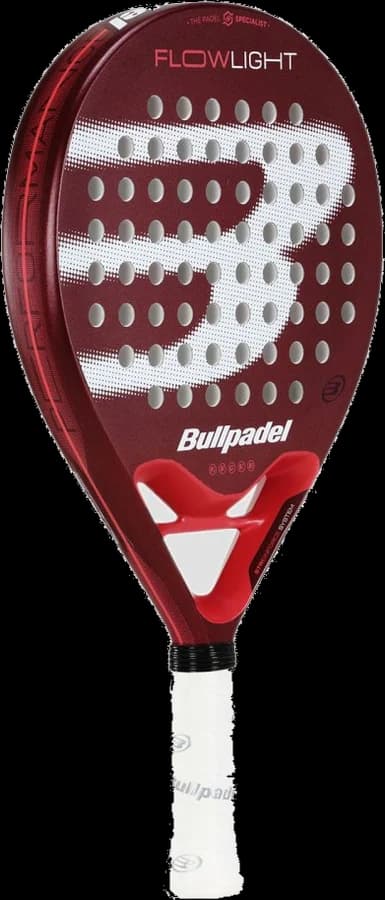
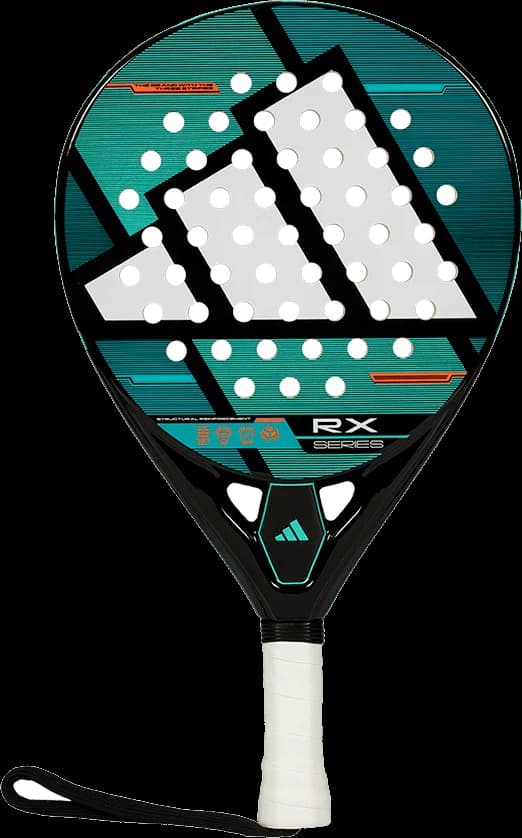
Left side
Built to finish the point.
Diamond heads carry the weight high for a heavier smash. They ask for a fast, early swing.
Diamond rackets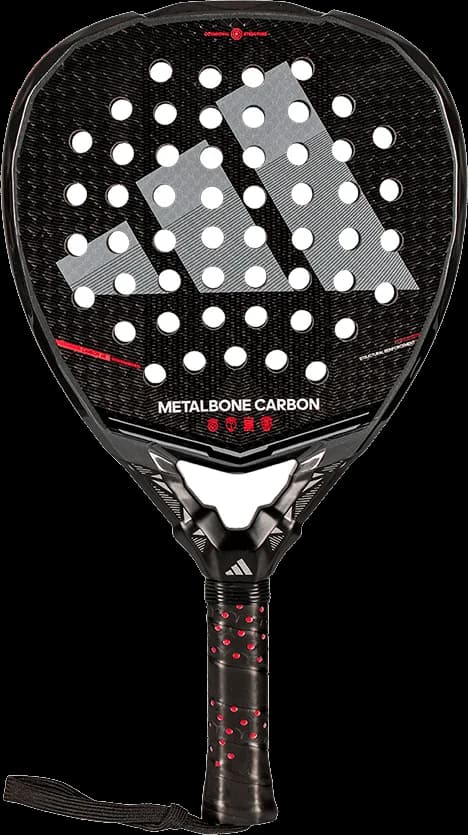
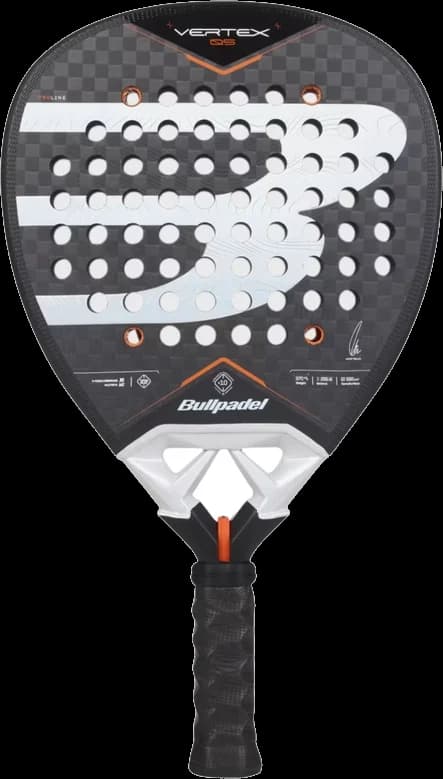
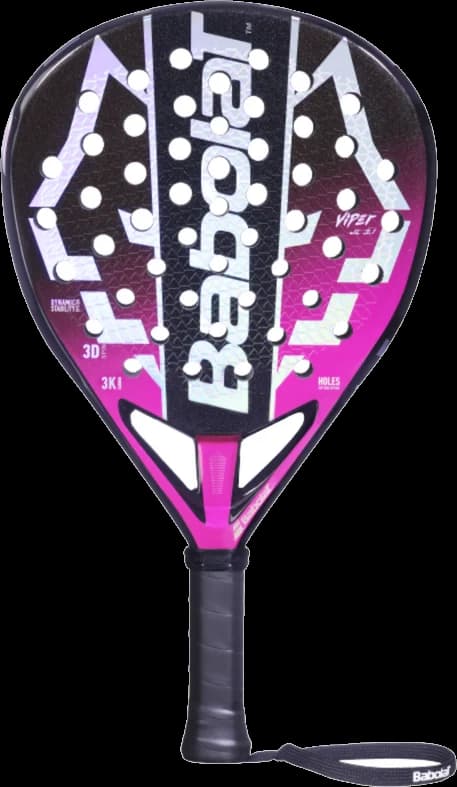
Ages 5 to 14
Kids padel rackets.
Shorter handles and lighter frames, sized for the hand that holds them.
Kids rackets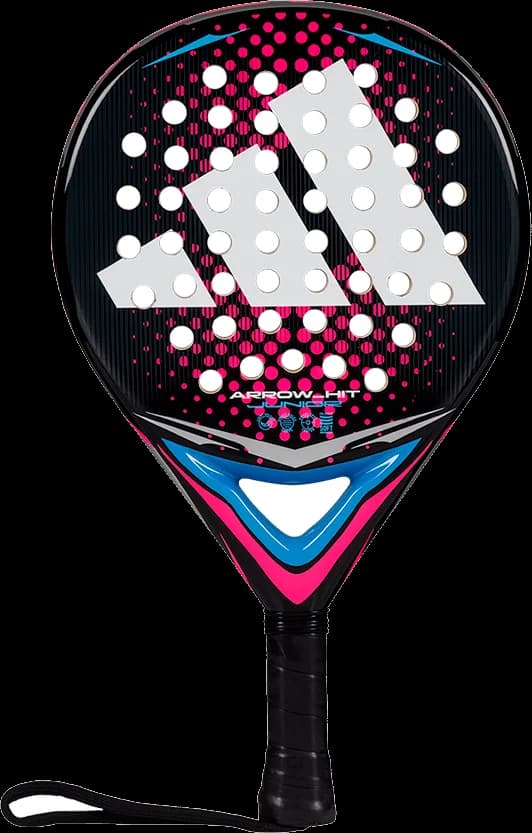
Shop by brand
Padel racket brands we stock
- BullpadelVertex, Hack, NeuronShop Bullpadel


- SiuxElectra, Diablo, TrilogyShop Siux


- VarlionLW, Maxima, ElbowCareShop Varlion


Also listed:NoxadidasBabolatHeadWilsonDunlopStarVieBlack CrownOxdogTecnifibreSearch by brand or model
Before you buy
Padel buying guides
How to choose a padel racket: shapes, weight, balance and the 2026 UK shortlist
How to choose a padel racket in 2026: the types explained, what makes a good one, how long it lasts, and seven first rackets ranked with honest verdicts.
Read the guideWhat padel racket should I buy?
Six taps, three rackets: the finder shortlists from everything on the site.
OpenWhich padel balls, and how long do they last?
Pressure, bounce, the tennis-ball question and the tube that most UK clubs use.
Open
Padel in Britain · LTA, October 2026
Padel in the UK: the fastest-growing racket sport in the country
1,500,000
people have played padel in Britain
2,445
courts across the country
682
venues to book them at
What is padel?
Padel is a racket sport played almost always as doubles on an enclosed court 20 metres long and 10 metres wide. Glass walls and wire mesh surround the court and they stay in play: once the ball has bounced on your side, it can rebound off the back glass or the side mesh and you can still return it. The racket is solid, stringless and drilled with holes. The ball looks like a tennis ball but holds less pressure, about 11 psi new against 14 for tennis according to the LTA, so it comes off the walls slowly enough to chase. You serve underarm, after a bounce, at or below waist height. You score exactly as in tennis: 15, 30, 40, game.
The one-line version, if someone asks at the bar: tennis scoring, squash-style walls, a smaller court and an underarm serve. The LTA calls it "a form of tennis that is easy to play, fun and extremely sociable", which is about right, though it undersells how long the walls take to master. Anyone with a tennis, squash or badminton background will rally within ten minutes. Reading a ball off the back glass takes a season.
You will see the sport written as padel, pádel, padel tennis and, from people who have never seen it, paddle. The Spanish word is pádel and English settled on padel; the LTA says Spain's Sports Council fixed the spelling in 1993. "Padel tennis" is common in the UK because the operators use it in their page titles, and it means the same thing. People who search for the padel sport, the padel game or padel tennis all mean the same thing. "Paddle tennis" and "platform tennis" are two different American games with their own courts and their own rules, which is where most of the confusion comes from. If you are searching for the padel meaning, that is it: one sport, one spelling, a lot of nicknames.
Where padel came from: Acapulco, Marbella and a very fast fifty years
Padel was invented in 1969 by Enrique Corcuera at his house at Las Brisas in Acapulco, Mexico. He had a tennis-sized problem (not enough garden) and solved it by building a 20 by 10 metre court with 3 metre walls and a tennis net, and his wife Viviana, a former Miss Argentina, drafted the first rules as a birthday present. He called it Paddle Corcuera. Five years later Prince Alfonso de Hohenlohe, a friend who had spent summers at the house, built Spain's first two courts at the Marbella Club Hotel, and from there it went to Argentina with Julio Menditeguy in 1975. Those two countries built the sport: Argentina founded the first national association in 1988, and the International Padel Federation was formed in Madrid on 12 July 1991 by the Argentine, Spanish and Uruguayan associations.
Britain was early and then very late. A British Paddle Association was formed by expats in 1992, the same year as the first World Championships, and then not much happened for a quarter of a century. The LTA took British Padel into its operations in May 2019, when the country had a few dozen courts, and became the recognised governing body in November 2020 with 82. What followed is the fastest growth any racket sport has seen here: 15,000 players in 2019, 129,000 in 2023, 400,000 by the end of 2024, 860,000 by the end of 2025, a million by May 2026 and 1,500,000 by October 2026. About two-thirds of them also play tennis, which tells you where the first wave came from.
Globally the FIP's 2026 World Padel Report counts about 40,000,000 players in 191 countries and territories, 91,234 courts and 28,497 clubs. Spain is still the centre of the padel world and Italy is second by spending, but the same report puts the UK fourth in the world by total padel spending, ahead of Argentina, which would have sounded absurd in 2019. Padel is not an Olympic sport. It has been a medal sport at the European Games and the 2026 Asian Games, and the FIP is campaigning for Brisbane 2032, but as of October 2026 it is not on any Olympic programme.
| Year | What happened |
|---|---|
| 1969 | Enrique Corcuera builds the first court at his home in Acapulco; his wife Viviana writes the rules |
| 1974 | Alfonso de Hohenlohe builds Spain's first two courts at the Marbella Club Hotel |
| 1975 | Julio Menditeguy takes the game to Argentina |
| 1991 | International Padel Federation founded in Madrid (12 July) |
| 1992 | First World Championships in Madrid and Seville; British Paddle Association formed by expats |
| 2019 | LTA integrates British Padel; about 15,000 players in Britain |
| 2020 | Padel recognised as a discipline of tennis in Britain; 82 courts |
| 2024 | World Padel Tour and Premier Padel unify into one professional tour |
| Oct 2026 | LTA: 1,500,000 players, 2,445 courts, 682 venues; FIP: about 40 million players worldwide |
Sources: FIP history pages and the FIP World Padel Report 2026; LTA Padel releases of 15 May and 20 October 2026.
How a padel game works: the rules in two minutes
Four players, two a side, and you keep the same halves for a whole set. The right-hand player is the drive side, the left-hand player the revés (backhand) side, and most pairs settle into one or the other for life. The serve is underarm: you bounce the ball behind the service line, hit it at or below waist height, and send it diagonally into the opposite service box. You get two attempts. A serve that bounces in the box and then hits the glass is good. One that hits the mesh after bouncing is a fault. The receiver must let it bounce; you cannot volley a serve.
After that, the walls are the game. A shot must bounce on the opponents' floor before it touches their glass or mesh; hit their wall on the full and you lose the point. Once it has bounced, it can rebound off any of their walls and they can still return it before the second bounce. You may use your own back glass to get a ball back over the net (the Spanish call it the contrapared and it feels like cheating the first time it works), but your own mesh is out of bounds. Touch the net, hit the ball before it crosses, let it bounce twice, or hit your partner with it, and the point is gone.
Scoring is tennis: 15, 30, 40, game; six games by two for a set; best of three sets with a tie-break at six all. At 40-40 clubs play one of three endings, which you agree before the first serve. Traditional advantage. Golden point, a single deciding point with the receivers choosing who takes it. Or the Star Point, approved by the FIP in November 2025 and used across Premier Padel and the FIP tours from 2026: two advantages, and if the game reaches a third deuce one sudden-death point settles it. The 2026 LTA National Championships used the Star Point in every match. Social games mostly play golden point because it gets you to the bar on time.
Three rules that catch new players every week. The wrist cord on the racket is compulsory under FIP rules and dropping your racket or snapping the cord loses the point. A ball that bounces and then leaves the court through the door is a winner for the hitter on most UK courts, because chasing it outside is only allowed on courts built with a safety zone, which the LTA says most club venues do not need. And you change ends after the first game and then every two games, not every set, which is why you will see experienced players drifting to the other side when you are still looking for your water bottle.
- Serve underarm, after a bounce, at or below the waist, diagonally into the box. Two attempts. The receiver must let it bounce.
- Your shot must bounce on the opponents' floor before it touches their walls. After the bounce, every wall is in play.
- Your own back glass can help you return a ball. Your own mesh cannot.
- Tennis scoring. At deuce: advantage, golden point or the Star Point, agreed in advance.
- Wrist cord on, always. Drop the racket or break the cord and the point is lost.
The padel court: 20 by 10, glass, mesh and a lot of sand
A padel court is 20 metres long and 10 metres wide inside the walls, which makes it about three-quarters of the lined area of a tennis doubles court and about a third of the full tennis footprint once you include the run-off. The net is 0.88 metres high at the centre and 0.92 at the ends, lower than a tennis net. The service lines sit 6.95 metres from the net. The back walls are 4 metres high: 3 metres of toughened glass topped by a metre of welded mesh. The sides mix glass and mesh at 3 and 4 metres depending on the court design, and the openings at the net are the doors you walk in through and, on some courts, chase balls out through.
The floor in Britain is almost always artificial grass filled with silica sand, laid on porous asphalt so it drains. That surface explains two things new players notice. The first is why trainers are a bad idea: sand on carpet is slippery under a smooth sole and grips too hard under a running shoe, which is why padel shoes have herringbone or studded soles designed to shed sand; the adidas Crazyquick is one of them. The second is why the same court plays differently in week one and week ten: how much sand sits on top, how worn the pile is and whether it rained last night all change the bounce.
Covered courts matter more here than in Spain. The LTA notes that covered courts are used consistently all year while uncovered ones drop off in winter, and nearly three-quarters of the 2026 Premier Padel tour is played indoors for the same reason. If your club has both, the outdoor court in January is a different sport from the indoor one, wetter, slower and harder on the shoes. A panoramic court, the one the operators advertise, holds its glass with minimal framing so spectators can see the whole court; it plays the same.
| Element | Specification |
|---|---|
| Court | 20 m long, 10 m wide, inside the walls |
| Net | 0.88 m at the centre, 0.92 m at the ends, 10 m long |
| Service line | 6.95 m from the net |
| Back walls | 4 m: 3 m glass plus 1 m mesh |
| Racket | Max 45.5 cm long, 26 cm wide, 38 mm thick; wrist cord up to 35 cm, compulsory |
| Ball | 6.35 to 6.77 cm, 56 to 59.4 g, bounce 135 to 145 cm from 2.54 m |
| Surface in the UK | Sand-filled artificial grass on porous asphalt (SAPCA code of practice) |
FIP Rules of Padel, 2026 edition; SAPCA Code of Practice for the Construction of Padel Courts, September 2025.
Padel equipment: what you actually need to play
Less than you think, and the club will lend you most of it for the first session. The LTA's own advice is that most venues have bats and balls to hire, and Powerleague, for one, hires rackets from £3. Once you know you are staying, the padel gear you need in order of importance is a racket, shoes with a court sole, balls, a bag, and then the consumables: overgrips, a frame protector and, if you play twice a week, a ball pressurizer that keeps an open tube lively.
The racket is the big decision and the one this shop exists for. Padel rackets are solid frames with a foam core between two fibre faces, and the shape (round, teardrop or diamond), the weight (340 to 390 g for adults) and the core and face materials decide how forgiving or how fast a racket feels. The LTA tells beginners to start with a round bat, which gives the most control, and we agree; the best padel racket for beginners page explains why, and the how to choose a padel racket guide goes deeper on shapes, weight and balance. Entry rackets from the padel brands run £60 to £130, the mid-range most club players settle on £120 to £220, and the pro flagships £220 to £350; junior rackets £40 to £90.
Shoes are the thing new players skip and regret. A padel shoe has a sole that sheds sand, a reinforced toe for the drag on low volleys, and a lateral cage so your foot does not roll in a lunge; running shoes have none of that. Balls go flat within a few sessions of opening the tube, so buy them by the dozen box rather than at the club reception. A bag keeps the racket out of a hot car boot, which kills foam cores faster than any smash. None of it is exotic, and all of it is on this site with honest advice about what not to buy.
Swipe sideways for every column
| Item | Why you need it | UK price band | Where to look |
|---|---|---|---|
| Racket | Shape, weight and core decide how the game feels | Entry £60 to £130, mid £120 to £220, pro £220 to £350, junior £40 to £90 | Padel rackets |
| Shoes | Sand-shedding sole, toe cap, lateral support | £60 to £150 RRP, shops from about £50 | Padel shoes |
| Balls | Lower pressure than tennis balls; go flat once opened | £4 to £7 a tube of three; dozen boxes £15 to £19 | Padel balls |
| Bag | Two rackets, shoes, kit; keeps the racket out of the car | £25 to £110; covers £5 to £30 | Padel bags |
| Overgrips | Sweat, feel and handle size; replaced every few weeks | £3.50 to £10 a pack of three | Padel grips |
| Protector, pressurizer, wristband | Frame edges, open tubes, sweat | £3 to £7 for tape; pressurizers vary | Padel accessories |
Price bands from references/stats.md: brand RRPs and UK street prices checked October 2026.
Padel vs tennis, squash and pickleball
Tennis players arrive with the scoring, the volley and the overhead and lose the first month to the walls. The court is smaller, the ball is softer, the serve is underarm and there are no strings, so power counts for less and placement for more. The racket is the biggest change: a 45.5 cm solid frame with a foam core behaves nothing like a strung head, and the shots that win padel points (the lob, the bandeja, the vibora) are controlled rather than hit. A tennis player who learns to let the ball come off the back glass instead of attacking it early becomes a good padel player quickly. One who refuses stays at the same level for years.
Squash players have the opposite problem and the opposite advantage. They read walls instinctively and they move well in a small space, but squash is singles and padel is doubles, and the partner, the net and the lob are all new. Pickleball is the sport padel gets confused with in Britain because both arrived in the same wave. Pickleball is played on a 13.4 by 6.1 metre open court with a solid paddle and a perforated plastic ball; there are no walls, the serve is underhand and scoring runs to 11 with only the serving side scoring. The equipment looks similar from a distance. On court they have almost nothing in common.
Platform tennis and paddle tennis are the two American games whose names muddy the water. Platform tennis is played on a raised deck in winter with wire screens that are in play; paddle tennis, rebranded POP Tennis, uses a depressurised tennis ball on a 50 by 20 foot court with no walls. Neither is padel, and neither is played much in Britain.
Swipe sideways for every column
| Padel | Tennis | Squash | Pickleball | |
|---|---|---|---|---|
| Court | 20 x 10 m, enclosed | 23.77 m long; 10.97 m doubles | 9.75 x 6.40 m, four walls | 13.4 x 6.1 m, no walls |
| Walls in play | Yes, after the ball bounces on your side | No | Yes, all four | No |
| Racket | Solid, perforated, max 45.5 cm | Strung | Strung, max 686 mm | Solid paddle, no holes |
| Ball | Pressurised, lower pressure than tennis | Pressurised | Small rubber ball | Perforated plastic |
| Serve | Underarm after a bounce, at or below the waist | Usually overarm | Must hit the front wall above the line | Underhand, below the waist |
| Scoring | Tennis scoring, with golden point or Star Point options | Tennis | Rally points to 11 | To 11, serving side scores |
| Usual format | Doubles | Singles and doubles | Singles | Doubles and singles |
Court and equipment figures from the FIP, ITF, World Squash and USA Pickleball rulebooks as summarised in our research file.
Padel levels: what the Playtomic and LTA numbers mean, and which racket page to start on
Two rating scales are in use in Britain and they do not mean the same thing. Playtomic, the booking app most clubs use, gives every player a level from 0 to 7, set by a questionnaire and then moved by competitive match results; the amateur ceiling is 5.6. The LTA's padel rating runs 1.0 to 7.0 and is self-assessed from descriptors: 1.0 is "still working on getting the ball in play", 3.0 is "pretty consistent and can use tactics like playing off the wall", 5.5 is nationally ranked. The catch is that an LTA 3.5 is aimed at tennis or squash players who are new to padel, while a Playtomic 3.5 is "Intermediate High". Same number, different player.
For buying a racket, which is the only reason a shop should care, we map them like this. Beginner is Playtomic 0 to 2.4 or LTA 1.0 to 3.0: getting the ball in play and starting to use the back glass. Intermediate is Playtomic 2.5 to 4.4 or LTA 3.5 to 4.5: rallying with control, lobbing and volleying on purpose, knowing where to stand. Advanced is Playtomic 4.5 to 5.6 or LTA 5.0 to 5.5: playing tournaments. The FIP sets no weight, balance or core rule for rackets, only size and the wrist cord, so the level bands are retail convention, not regulation, and plenty of good players stay on a round racket by choice.
Swipe sideways for every column
| Level | Playtomic | LTA rating | Self-test | Start here |
|---|---|---|---|---|
| Beginner | 0 to 2.4 | 1.0 to 3.0 | Getting the ball in play, starting to use the glass | Best padel racket for beginners |
| Intermediate | 2.5 to 4.4 | 3.5 to 4.5 | Rallying with control, lobbing and volleying on purpose | Best padel racket for intermediate |
| Advanced | 4.5 to 5.6 | 5.0 to 5.5 | Playing tournaments, finishing points at the net | Advanced padel rackets |
| Junior | n/a | n/a | Under 14 or under 150 cm; needs a lighter, shorter racket | Kids padel rackets |
Playtomic levels from its help centre (updated October 2026); LTA ratings from "What is my padel rating?". The mapping is ours.
Playing padel in the UK: where, what it costs and how to book
There are 2,445 courts at 682 venues as of October 2026 and the number changes monthly, so the reliable way to find one is a booking app: Playtomic (used by Powerleague and PadelHaus among others), MATCHi (Game4Padel) or Padel Mates (Rocket Padel), or the venue's own site. David Lloyd and Virgin Active include padel in membership at the clubs that have courts. The big operators are Game4Padel, Powerleague, Rocket Padel, The Padel Club, Soul Padel, Padium and Padel Social Club, and hundreds of tennis clubs have added a court or two beside the grass.
Cost is the pleasant surprise. The LTA's published averages run from £17 an hour for an outdoor court in the north of England to £37 for an indoor court in London, and its research puts an average off-peak booking at £7 per person per hour. Introductory group sessions are listed on the apps from about £5. Compared with a round of golf or a gym membership it is cheap, and compared with tennis the court is booked for four people, so the maths splits better.
Where it is strongest: the cities, where more than half the courts are, and increasingly the north, which the Guardian reported in September 2026 is where the fastest growth has been. Where it is contested: planning committees, because the sound of a ball on glass carries, and councils in Bath, Weybridge and York have refused courts near houses on noise grounds. None of that has slowed the numbers. Padel UK, as a sport, has gone from a curiosity to the LTA's fastest-growing format in seven years.
A padel shop, not a tennis shop with a padel shelf
Most places selling padel rackets in Britain are tennis shops that added a shelf, or sports superstores that added a search term. Padel Depot sells padel and nothing else, and the difference shows in the questions we answer. Which shape for a player who is still learning the walls. Why a 20 g difference in weight matters more than the carbon grade on the box. Why the 2026 edition of a flagship is the same racket as the 2027 one at a hundred pounds less. Every category page on this site is a buying guide first and a grid second, written by people who play on sand-dressed UK courts most weeks and have bought the wrong racket more than once.
The range covers the brands British players search for: Bullpadel, Nox, adidas, Babolat, Head, Wilson, Siux, Dunlop, Varlion, Tecnifibre (the attacking Wall Breaker 365 is the firm attacking one), Black Crown (the round Piton is its best-known racket), Raquex (try the diamond Elite), Volt and Oxdog (start with its firm Hyper Pro+ teardrop), from entry rackets at about £50 to the 2027 tour frames at £340, plus shoes from adidas, ASICS, Bullpadel, Nox, Wilson and Babolat, balls from Head, Bullpadel, Wilson, Dunlop and Babolat, and bags, grips and protectors to match. Prices are the prices UK shops are charging this season. Where last season's version of a racket is still on sale, it sits next to the new one with the saving stated.
Delivery is tracked, takes 3 to 4 working days and is free on orders over £40, which a racket on its own clears. Anything unused goes back within 30 days. If you searched for a padel shop near me and found this page, the honest answer is that we are online, UK-wide, and happy to tell you by email which racket to buy in one line if you send us your level, your sporting background and your budget.
Good
- Padel only: every page is a buying guide, not a catalogue
- Thirteen racket brands, entry to tour, at UK shop prices
- Tracked UK delivery in 3 to 4 working days, free over £40
- 30-day returns on unused gear
- Real specs on every product: shape, weight, balance, core, face
Not so good
- Product photography is still arriving for many models
- UK addresses only for now
- Change-of-mind returns are at your cost
Questions people ask about padel
What is padel in simple terms?
A racket sport played in pairs on a 20 by 10 metre court surrounded by glass and mesh walls that stay in play after the ball bounces. You serve underarm, use a solid perforated racket and a slightly soft ball, and score like tennis. Tennis scoring, squash-style walls, smaller court.
Is it padel or paddle?
Padel. The Spanish word is pádel and English dropped the accent. Paddle tennis and platform tennis are different American sports, which is where the confusion comes from.
What is padel tennis, and is it the same as padel?
The same sport. Padel tennis is the name UK operators and the LTA sometimes use, and it describes the same sport with the same rules. There is only one padel.
What do I need to start playing padel?
For a first session, nothing: most venues hire rackets and balls. Once you are staying, a round racket, shoes with a court sole, a tube of balls and a bag, in that order. The whole kit from the padel brands starts at about £150.
How much does it cost to play padel in the UK?
The LTA's average court-hire prices run from £17 an hour outdoors in the north of England to £37 an hour indoors in London, split between four players. Its research puts an average off-peak booking at £7 per person per hour.
Can you play padel with two people?
Yes. Singles follows the same rules on a normal court or a narrower purpose-built one, but almost every court in Britain is built for doubles and singles on a full court is hard work. Padel is a doubles game by design.
Is padel in the Olympics?
No. As of October 2026 padel is not on any Olympic programme. It has been a medal sport at the European Games and the 2026 Asian Games, and the FIP is campaigning for inclusion at Brisbane 2032.
How many people play padel in the UK?
The LTA counted 1,500,000 adults and juniors in Britain who had played in the previous year, as of 20 October 2026, on 2,445 courts at 682 venues. In 2019 the figure was about 15,000.
Is padel easy to learn?
Easy to start and slow to master. Anyone with a racket-sport background rallies within minutes, because the ball comes off the walls slowly and the court is small. Reading the back glass and learning the lob and the bandeja take a season or more.
Can you play padel in the rain?
Outdoor courts are built to drain quickly, but whether play continues in the wet is each venue's decision, and most UK clubs stop in heavy rain. Covered and indoor courts are the winter choice, and shoes with a hybrid or herringbone sole cope best on a damp court.
What padel racket should a beginner buy?
A round racket between 350 and 365 g with a soft core and a fibreglass or 3K carbon face, in the £60 to £120 band. The LTA gives the same advice: start with a round bat for control. Our beginner page lists the ones we sell and explains each.
How long does delivery take from Padel Depot?
Tracked UK delivery takes 3 to 4 working days and is free on orders over £40, which any racket clears. Below £40 the rate is £3.95. Unused items can be returned within 30 days.
Sources